
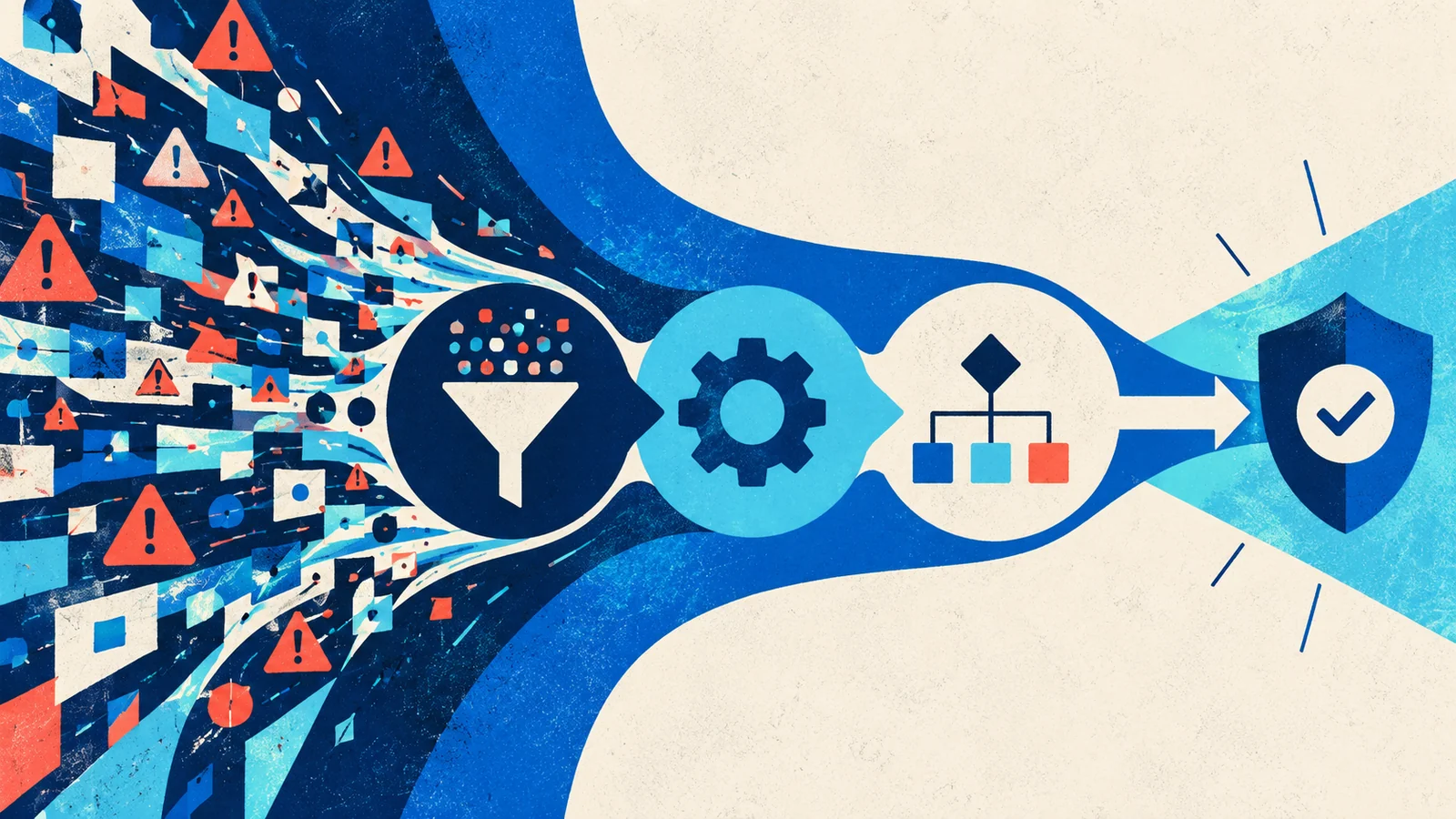
Choose a workflow with a clear end
Pick a recurring investigation or response task that your team understands well. Document its starting event and what a completed result looks like. For a suspicious sign-in, that might mean gathering identity context, checking device information, identifying related activity, and presenting an analyst with a supported recommendation. Avoid treating every alert as the same process.
Establish the baseline
Observe a representative sample of the current workflow. Record the information analysts need, the systems they touch, the decisions they make, and the reasons cases are escalated. Separate active analyst effort from time spent waiting for data or another team. Those distinctions make the later comparison more useful than a single average time-to-close figure.
Test the integrations with real constraints
A connector name does not tell you whether a workflow will work in your environment. Check permissions, API limits, data completeness, event delays, and the fields needed for each decision. Include a case where a dependency is unavailable. Tines describes workflows as connected actions and events; the evaluation still needs to establish how those connections behave with your systems and operating rules.
Define what requires human judgment
Decide which steps can run automatically and which need a person to approve them. Gathering context is different from isolating a device or disabling an account. Record the reasoning and evidence presented to an approver. Evaluate how a rejected recommendation is handled and whether a person can safely modify or stop the workflow.
Measure quality as well as speed
Compare the completeness of the case record, the correctness of routing, unnecessary escalations, and the effort needed to resolve exceptions. A shorter workflow is not a better workflow if it suppresses important evidence or sends the wrong action to the wrong system. Use the same scope and representative cases when comparing alternatives.
Plan the operating handover
Identify who will maintain the integrations, approve changes, review failures, and own the playbook. Require readable run history and a way to recover from partial completion. Ask the team that will run the system to review the final workflow. The goal is an operating capability they can understand, maintain, and improve—not a successful demonstration that depends on its author being present.